Vertical farming represents a transformative approach to food production, allowing crops to be grown in stacked layers within controlled environments. While the concept offers significant advantages in terms of space utilization and urban food security, optimizing crop yield remains a primary challenge. This article explores effective strategies to maximize productivity in vertical farms, focusing on energy efficiency, environmental control, and plant optimization techniques.
Understanding Yield Metrics in Vertical Farming
Yield measurement in vertical farming differs from traditional agriculture due to the multi-layered nature of these farms. Two key concepts are essential: absolute yield — the edible kilograms produced per square meter of surface area annually, and footprint yield — edible kilograms produced per square meter of land area annually. Unlike outdoor farming, where surface and land areas are synonymous, vertical farms multiply productivity vertically, increasing footprint yield remarkably. However, this vertical expansion also means energy requirements proportionally increase, establishing energy consumption as a critical factor in crop yield optimization.
Consequently, focusing on absolute yield provides a clearer picture of operational efficiency independent of the number of layers, emphasizing the importance of maximizing production per surface unit while managing energy inputs effectively.
Enhancing Energy Efficiency to Boost Crop Production
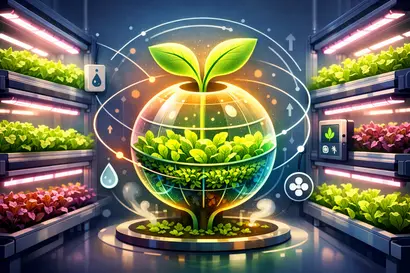
Energy consumption, particularly related to artificial lighting, is the largest constraint in vertical farming. Optimizing the amount of edible mass produced per watt of light is crucial to enhancing efficiency. Innovations such as LED grow lights that emit specific wavelengths tailored to plant species contribute significantly. These "light recipes" stimulate plant growth phases more effectively than natural sunlight, enabling faster harvest cycles and improved edible mass ratios.
For example, leafy greens grown in vertical farms achieve up to 92% edible mass, compared to only about 40% in field-grown counterparts. Moreover, vertical farming allows cultivating up to 12 harvests annually, well beyond the two typical outdoor harvests for lettuce. Such advancements directly contribute to higher energy efficiency, reducing waste energy spent on non-edible plant parts and accelerating growth.
Leveraging Environmental Control and Data Analytics
Vertical farms excel through their precise control of temperature, humidity, CO2 concentration, and nutrient delivery, surpassing the limitations of greenhouses and open fields. This meticulous environment eliminates stressors and waste, allowing plants to thrive under ideal conditions. Coupled with extensive sensor networks monitoring plant health and growth parameters, operators gather large amounts of data for continuous optimization.
By analyzing this data using advanced algorithms and artificial intelligence, vertical farms can fine-tune growth variables in real time, resulting in consistent improvements in yield. The rapid feedback loop—enabled by multiple harvests per year—accelerates research and development efforts that identify optimal growing conditions, nutrient formulations, and light settings customized for each crop type.
Breeding and Genetic Optimization for Vertical Farming
Traditional crop varieties bred for outdoor agriculture often do not align with the unique priorities of vertical farming, such as short plant height, high edible mass percentage, and compatibility with hydroponic systems. Selecting and developing crop breeds suited to these parameters is essential for maximizing yield and energy efficiency.
Modern techniques, including gene editing and selective breeding, enable creating varieties optimized for rapid growth cycles, compactness, and tailored nutrient use. This reduces energy demands and space requirements per crop, expanding the range of viable plants for vertical farming beyond leafy greens to include vegetables, pulses, and potentially staple crops in the future.
The Future of Vertical Farming Yield Optimization
Continual advancements in LED technology are anticipated to further boost energy efficiency by increasing light output and enabling placement closer to plants without heat damage. These developments support higher planting densities and more layers per building, multiplying overall crop production.
Moreover, the integration of renewable energy sources, such as solar power, promises to reduce electricity costs and carbon footprints, allowing vertical farms to sustainably expand their crop variety and volume. As technologies evolve, the potential for vertical farming to reclaim arable land and conserve global freshwater resources becomes increasingly attainable.
Conclusion
Optimizing crop yield in vertical farms involves an intricate balance of improving energy efficiency, leveraging precise environmental controls, and developing crop varieties tailored for indoor cultivation. Maximizing edible mass per watt of energy, accelerating growth cycles through custom light recipes, and adopting data-driven management practices collectively contribute to making vertical farming more productive and sustainable. These ongoing innovations hold great promise for addressing global food security challenges while conserving valuable natural resources.
For further insights on technology integration and sustainable practices in vertical farming, visit our pages on Vertical Farming Systems, Data-Driven Agriculture, and Sustainable Food Systems.
Vertical farming using hydroponics is a smart solution for sustainable vegetable production. It saves space, uses less water, and delivers fresh, nutrient-rich crops all year . Perfect for urban agriculture and future food security #Hydroponics #VerticalFarming #SmartAgriculture https://t.co/qbdm6y1pti
— Albert Founder of GIB farm Ltd (@MANIRAFASHAAlb2) October 30, 2025